
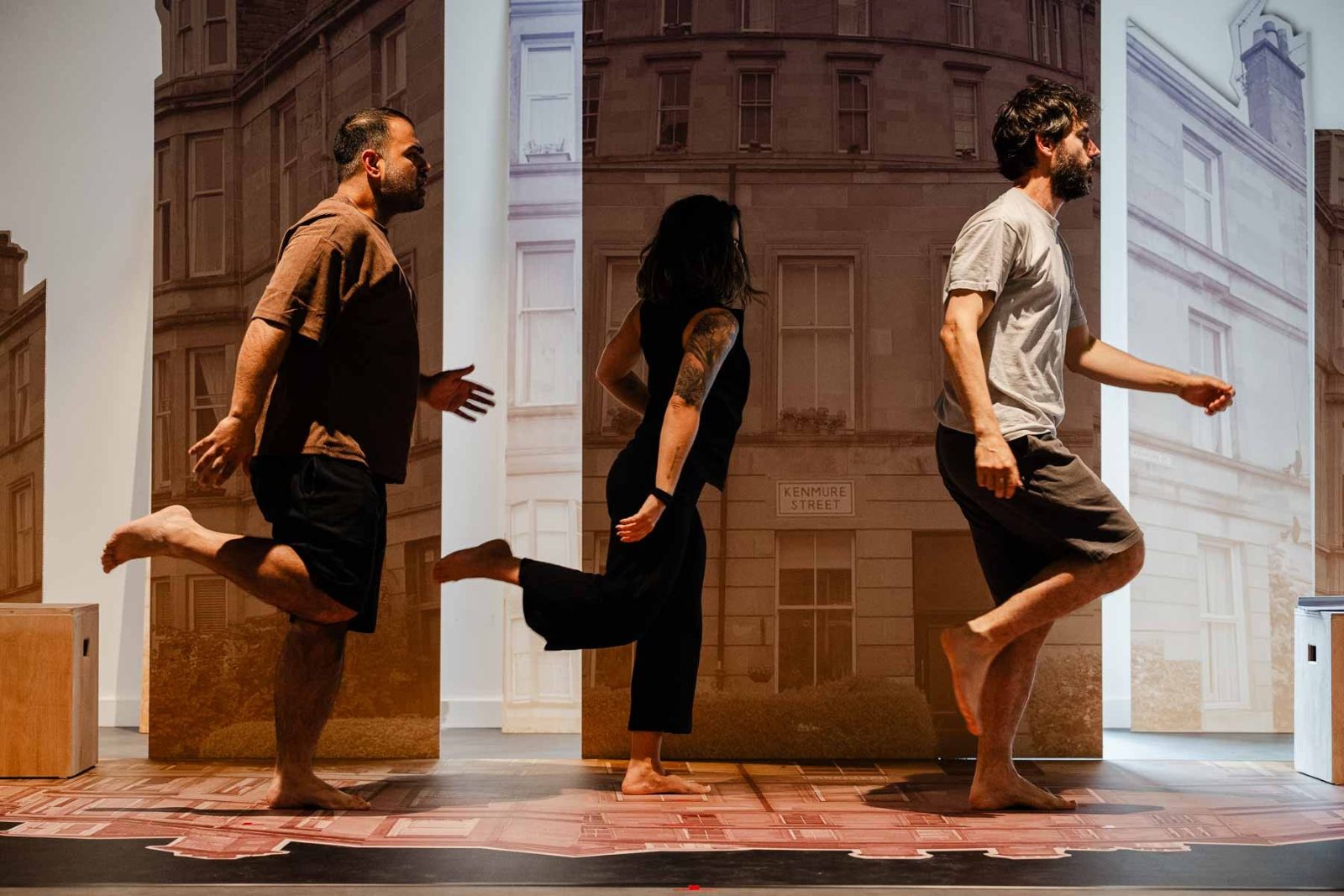
In 2021, Kenmure Street in Glasgow became famous when residents and protestors joined together to prevent two men from being taken away in a van and deported. At the time, it was taken as representative of Glasgow’s positive attitude to immigration, an image that has recently been heavily tested, with anti-immigration protests, often fuelled by social media and organised from outwith Scotland, dominating the headlines.
In this atmosphere of increased bigotry and violence, it was joyful to see a production that focused on community and the things that we have in common. Everyone needs a secure home, and it’s not difficult to imagine the terror of not knowing when you could be taken away, or where you would be sent. Migrants have become some of the most demonised people in our society, and this is a timely and needed reminder of their humanity.
Staged as a verbatim piece that combines storytelling with dance, the audience contained a few residents who had been at the Kenmure Street protest, and they naturally added to the authenticity, catching up on each other’s news, as they took their seats. One critic behind me was worried that the dance would undermine the seriousness of the issue, saying (a little loudly) that he didn’t want someone body-popping as the police dragged them off (or words to that effect), but he needn’t have worried, the dance was an inspired way of focussing on feelings without having to divulge too many intimate details of real people’s lives.
It also meant Rupture didn’t have to force the drama. When boiled down, not much happens. The authorities want to move a van, and a large crowd stops them. The residents, represented by Umar Butt, Leticia Sánchez, and Adam Tompa, start their day, realise what’s happening, are scared, get involved, share food, celebrate their victory and then go to bed, having become a part of Glasgow’s proud tradition of campaigning against injustice; up there with the poll tax and the opposition to the invasion of Iraq. With not much to say beyond observations and slogans, the whirl of noise and movement kept events urgent and unpredictable.
The three performers were more than equal to the task of representing the many people who were there that day. Butt was the Everyman who helped us get our bearings, and brought most of the comedy. At one point he has to decide whether a badge is a sign of solidarity or an emblem of hate, a dilemma that’s becoming a daily occurrence. Tompa, with his enthusiasm and sadness, gave the show a sense of danger, as if an unhappy outcome was possible. Sánchez, ferociously charismatic, made a street sit-in seem the most romantic and heroic thing a person could do. The music, a lively mixture of pop and traditional, South Asian and Scottish reinforced the production’s point that blending people and cultures is both creative and compassionate, and that with love and respect, real change is possible.
These Are Our Neighbours has finished its run

Comments