
St Luke’s, a converted church that retains a good deal of original features, hosts a lot of artists that don’t necessarily suit the austere, reverential surroundings. Tonight this is not the case. With chairs arranged in a slightly haphazard way, and hushed tones even between acts, there’s a sense of relaxation mixed in with the usual twitch of pre-show excitement.
Naima Bock is accompanied by only a guitarist tonight, Oliver Hamilton of caroline, so there’s less bombast to her set than you might hear on record, particularly the jazz notes and choral singing of 2024’s Below a Massive Dark Land. While this means we’re not getting the rousing rounds of ‘Age’ or the elegant layering of ‘Kaley,’ it allows Bock to focus on her sharp songwriting and emotional range. ‘Gentle’ couldn’t be a more perfect opening to the night, but each song reveals a new, subtle twist to Bock’s ability to conjure vivid imagery with just a few words. ‘Campervan’ and ‘Giant Palm’ are particular highlights, the latter closing her short set on a note of eloquent, expressive beauty.
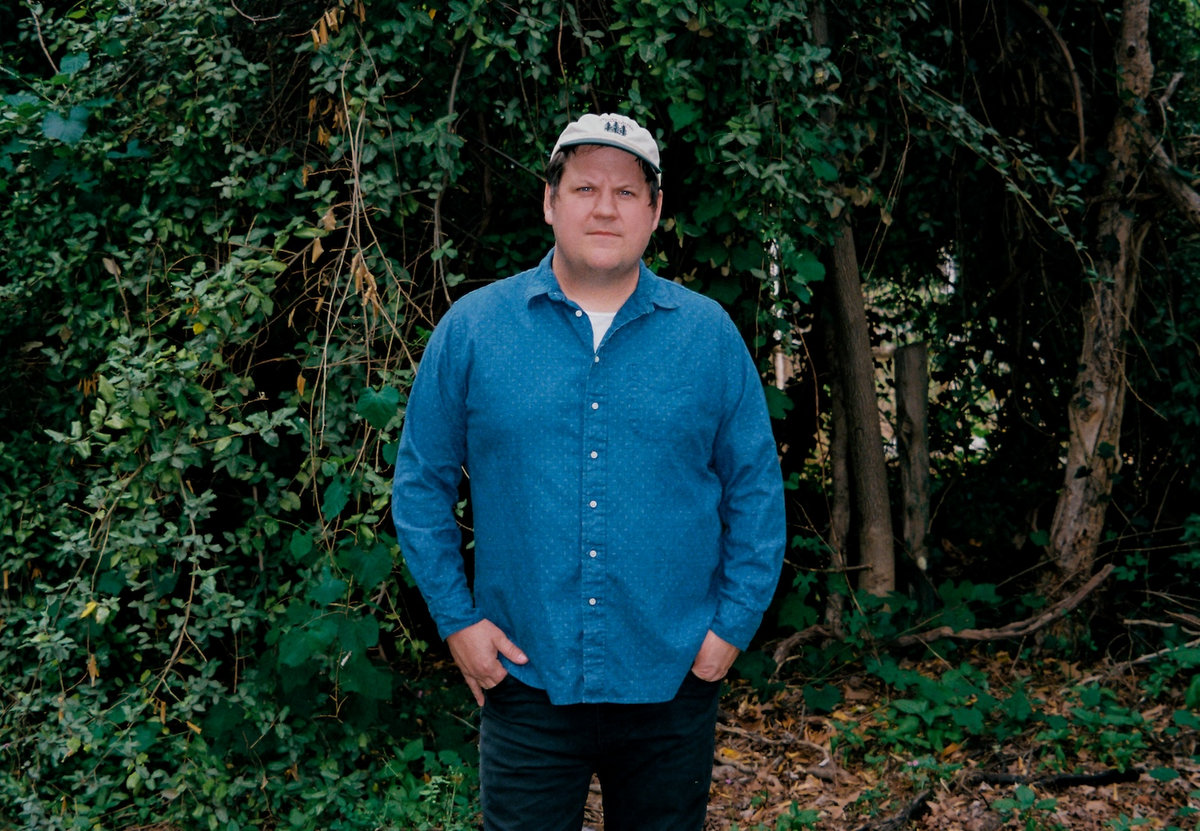
Unsurprisingly, Jake Xerxes Fussell is also keeping it simple tonight. He’s joined by Declan Haughian on drums, which provides an occasional bit of oomph, but the focus remains consistently on Fussell’s fingerpicking guitar playing and weathered, powerful voice. He may be known first and foremost as a traditionalist (almost every song tonight is an old, public domain folk number), but he’s no luddite. This is clear early on through a cover of Nick Lowe’s ‘I Love The Sound of Breaking Glass’ as he transforms the new wave classic into a sombre, dark lament that’s more dirge than disco. Arthur Russell’s ‘Close My Eyes’ gets similar treatment, though that song was always wistful, but the removal of Russell’s experimental flourishes leave bare the lyrical vulnerability underneath.
For the most part, however, it’s a set defined by simplicity. Fussell speaks warmly about Scotland and Glasgow, banters comfortably with crowd and Haughian, but his mesmerising takes on these traditional songs, most a century or more old, leave the audience on the edge of their jauntily placed seats. ‘Rock Island Line’ has the steady beat of the old railroad, but the interpolated nursery rhyme lyrics showcase Fussell’s playful style, his ability to reinterpret such hallowed material and breathe fresh life into it. The quiet, immediate meditation on mortality on ‘When I’m Called’ is contrasted with the bouncy, loquacious ‘Boll Weevil,’ a song that only unfurls its mystery with time.
The evening ends with a pair of songs from Fussell’s second album, What In The Natural World, two of the night’s most whimsical, ‘Have You Ever Seen Peaches Growing on a Sweet Potato Vine?’ and ‘Billy Button.’ Each contains a reasonable dose of surrealism, but in Fussell’s hands even absurdist quirks are imbued with the gravitas of generational wisdom. We may be a long way, in both time and space, from the old American South that Fussell draws from, but for an hour or so in this nineteenth century landmark we’re able to hear the sounds of a bygone era brought to life once more.
Comments