
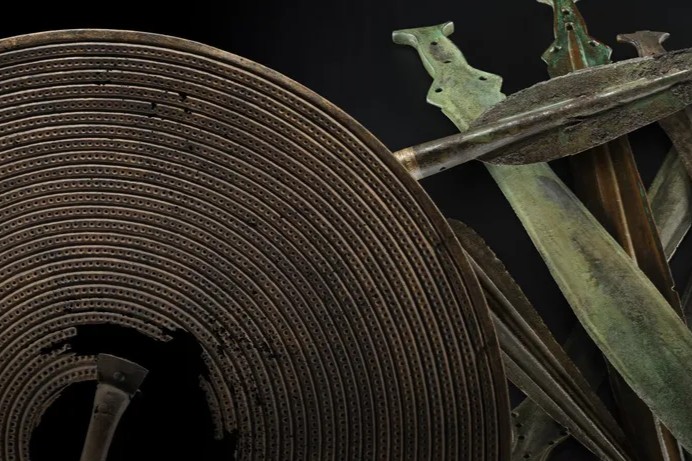
This blood-curdling exhibition doesn’t take up much space in the expansive National Museum of Scotland; a feast for the senses, a combination of a Victorian Venetian building and a moderneist castle-inspired structure. But it certainly packs a punch.
Evidence is on show of Neolithic, Bronze, and Iron-Age conflict, which is still raising its unnerving head across the country with new finds and knowledge. Finds across time reveal brutal and bloody territorial battles. Fatal wounds on excavated skulls and crafted tools and weapons fill the spaces.
Discoveries from sacred waters are on display, offerings often made to rivers and lochs. Destroyed weapons, intact, were often disregarded and carefully placed in rivers and bogs. This is also evidence of differing reactions to conflict. Most people weren’t warriors, of course. Communities were also made up of seafarers, traders, farmers and craftworkers. Could these findings be evidence of hope for peacetime or some other type of ritual?
Evidence also on show suggests that at the beginning of the Iron Age people would take up arms to protect their homes, using all manner of handmade tools from stone, bone, wood, spears, and daggers. The idea of the warrior reappears during the first century AD. Objects buried with a young male warrior in Clackmannanshire are exhibited. Glass and metal objects adorned his body and clothing, his spear wedged in his grave.
The idea of the female warrior is also explored. Women in Scottish folklore have always held social power, which suggests that they directed as well as participated in combat, although archaeological evidence is scarce and hotly debated. Don’t miss the informative video on this.
The experience ends with a grandiose Roman helmet on show, which would have been silver-plated and worn as ceremonial armour by a cavalryman. The exquisitely preserved helmet eerily shows the face of a young man with ornate curly hair. This was excavated from the Fort of Newstead in the Scottish Boarders. Although, the Roman army employed soldiers in their droves, Scotland was never fully captured by the Romans. In fact, they controlled less than half of the country. If you are interested in prehistoric Scotland this one is definitely for you.
Scotland’s First Warriors is at National Museum of Scotland until Sun 16 May 2027

Comments